Private Reykjavik City Walk
by Absorb Iceland · Hiking & trekking · City tours · private · Reykjavík
- Beginners welcome
- Luxury
- Couples
- Suits older travellers
- Good with teenagers
- Can be tailored
Would this be cheaper direct? No — we sell at Absorb Iceland's own price and take our commission from them, not from you. What you get here is one checkout across operators, one confirmation, and one place to change or cancel it. If you ever find it cheaper on their own site, tell us and we will match it or explain why we cannot.
More photos of Private Reykjavik City Walk
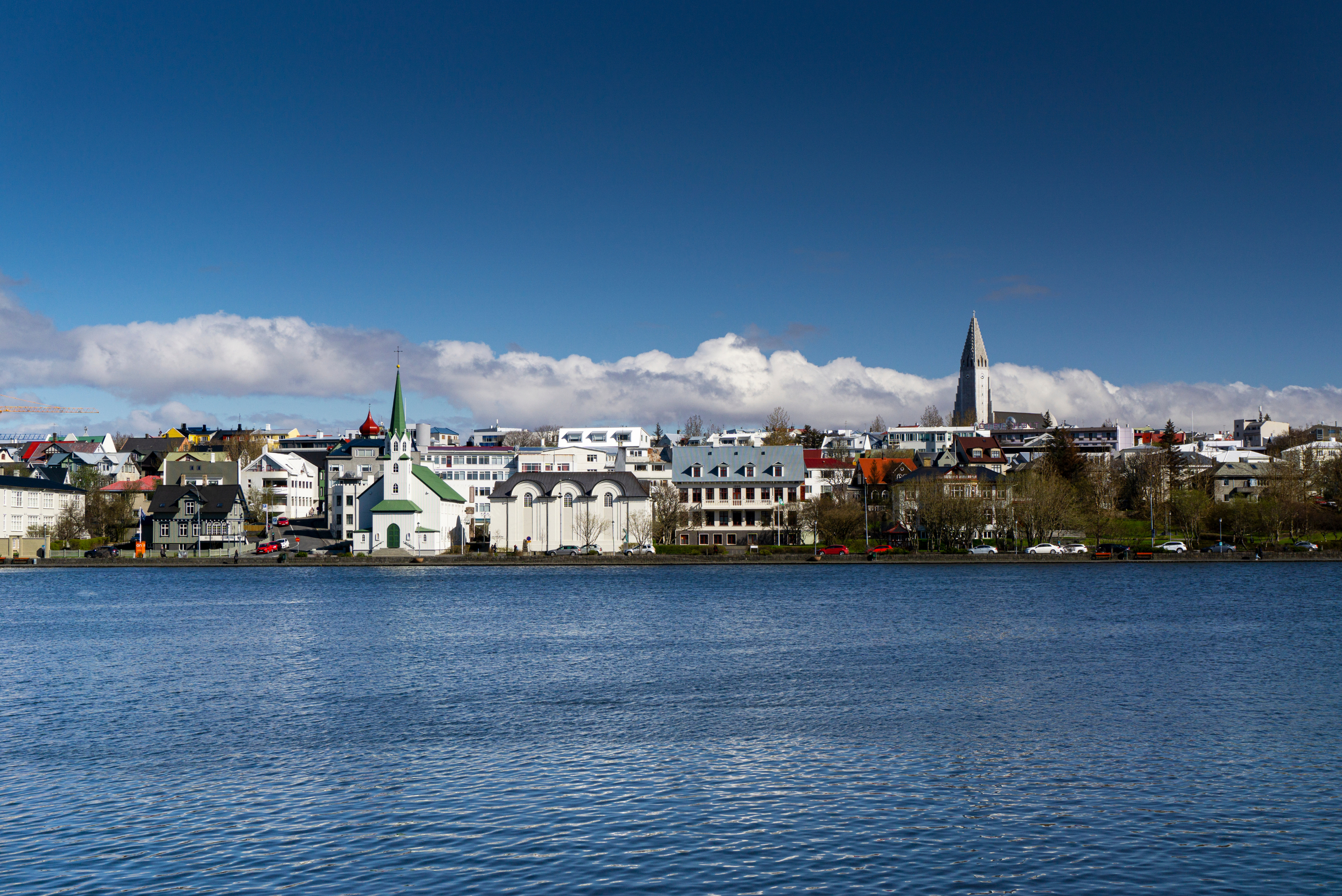
17 photos from Absorb Iceland. Tap any one for the full-size original.
Duration
4 hours
Difficulty
Very easy
Season
All year
Starts in
Reykjavík
Languages
EN
Departs
09:00, 10:00, 11:00, 12:00 …
Minimum age
4
Cancellation
Free until 2 days before
About this experience
Please note:
Available: All year
Duration: Approx. 3-4hrs, depending on your time spent at each stop.
Meeting location: Entrance of Hallgrímskirkja Church
Highlights
- Hallgrímskirkja - The Church of Hallgrimur
- Skólavörðustígur - The Reykjavik Rainbow Street
- Stjórnarráðshúsið - The Prime Minister's Office
- Harpa Concert Hall and Conference Centre
- Gamla Reykjavíkurhöfnin - The Old Harbor of Reykjavik
- Grjótaþorpið - The Rock Village district
- Austurvöllur Square
- Alþingishúsið - The Parliament House
- Dómkirkjan í Reykjavík - The Cathedral of Reykjavik
- Ráðhús Reykjavíkur - The City Hall of Reykjavik
- Reykjavíkurtjörn/Tjörnin - The Pond of Reykjavik
Description
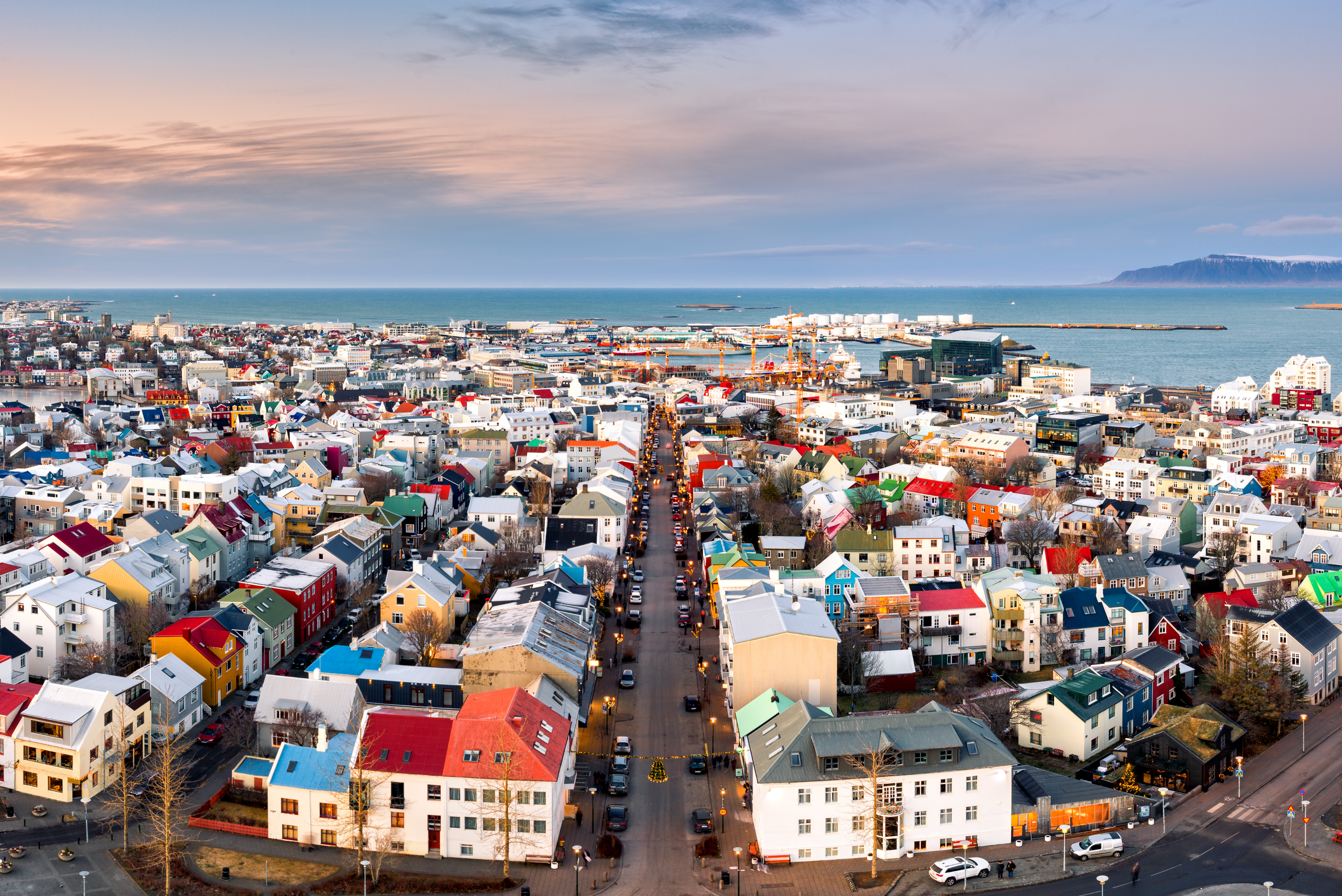
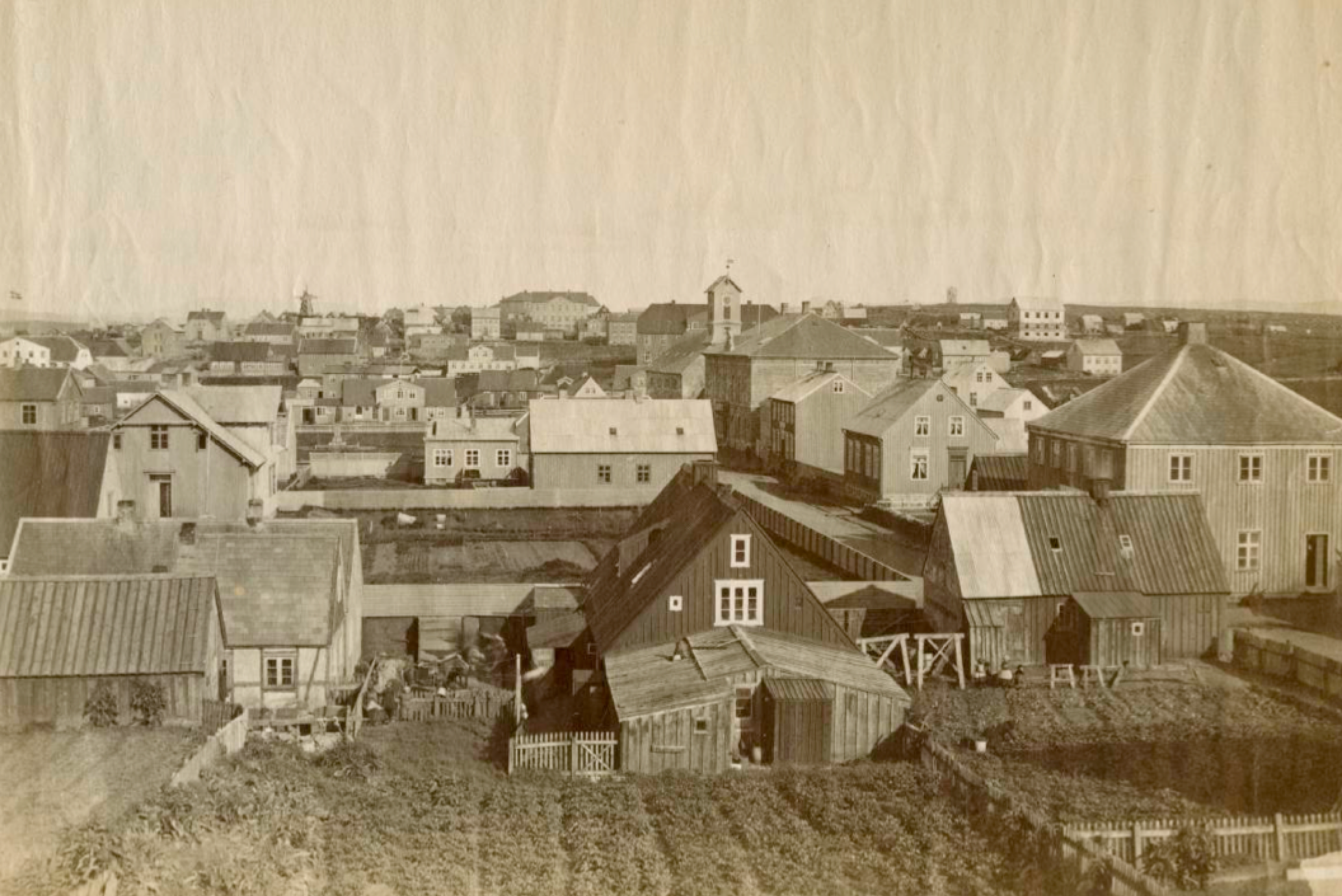
The vibrant city of Reykjavik started as a small village over 2,000 years ago when the first Viking settlers arrived from Norway. Most of them lived on farmsteads with self-sufficiency farming but soon Reykjavik became an important fishing and trading post, making Reykjavíkurhöfn, the Old Harbor of Reykjavik, the main lifeline of its residents and the neighborhood area. With that farmers and workers from the rural area of Iceland started moving to this fishing village around 1800 for jobs in the fishing industry, building small turf cottages in the downtown area by the harbor around the main street Aðalstræti, the oldest part of this city. From there the village grew with more buildings built and fewer farmsteads. Despite that, there is still one old sheep farmer left in the borough of Breiðholt with a sheep shed in his back garden. Reykjavik was granted municipal powers in 1786 but it wasn't called a city until 1962. Reykjavik City is divided into 8 boroughs and as of January 1st, 2022 Iceland has a population of 376,248 and 134,599 living in these boroughs. The whole Reykjavik Capital Area consists of seven municipalities with a population of 240,882, meaning 64% of Iceland's population lives in the Reykjavik Capital Area. Adding to that, many attend work and school in Reykjavik from other closeby municipalities.
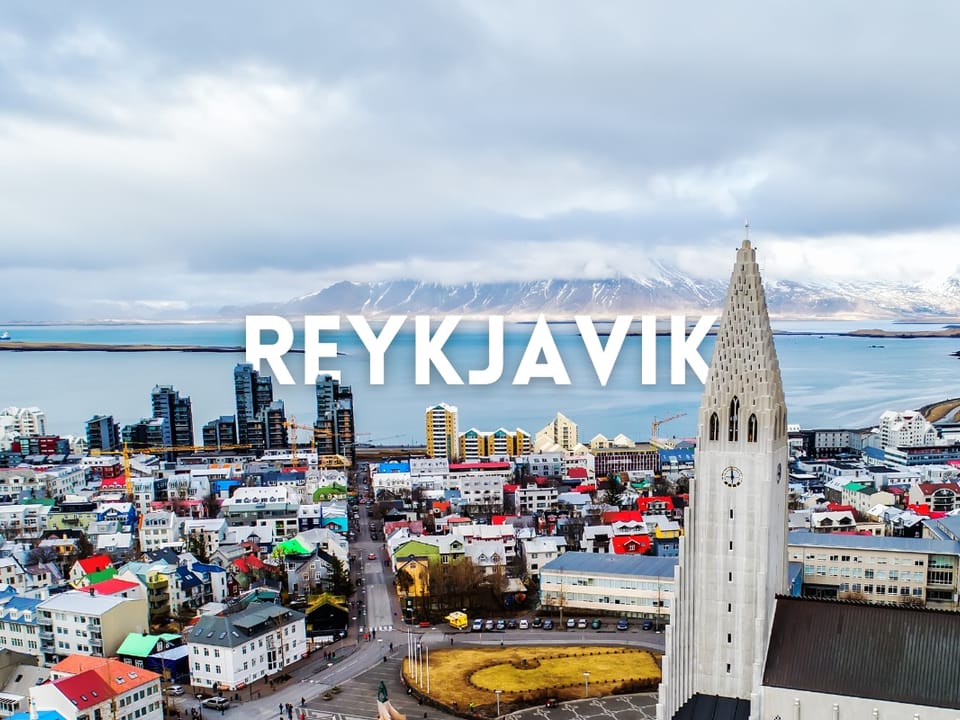
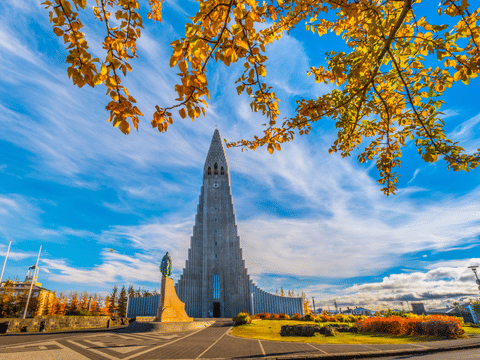
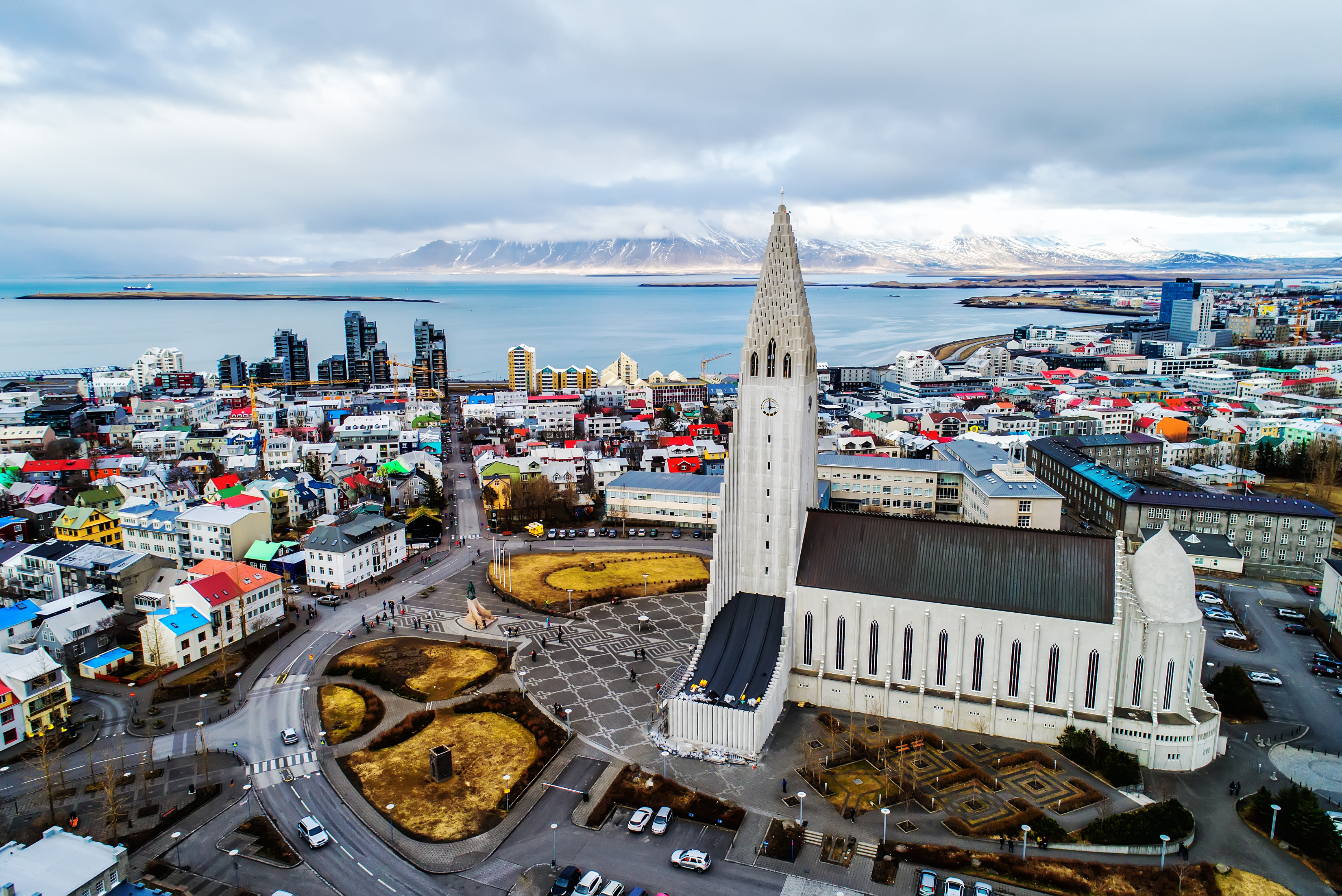
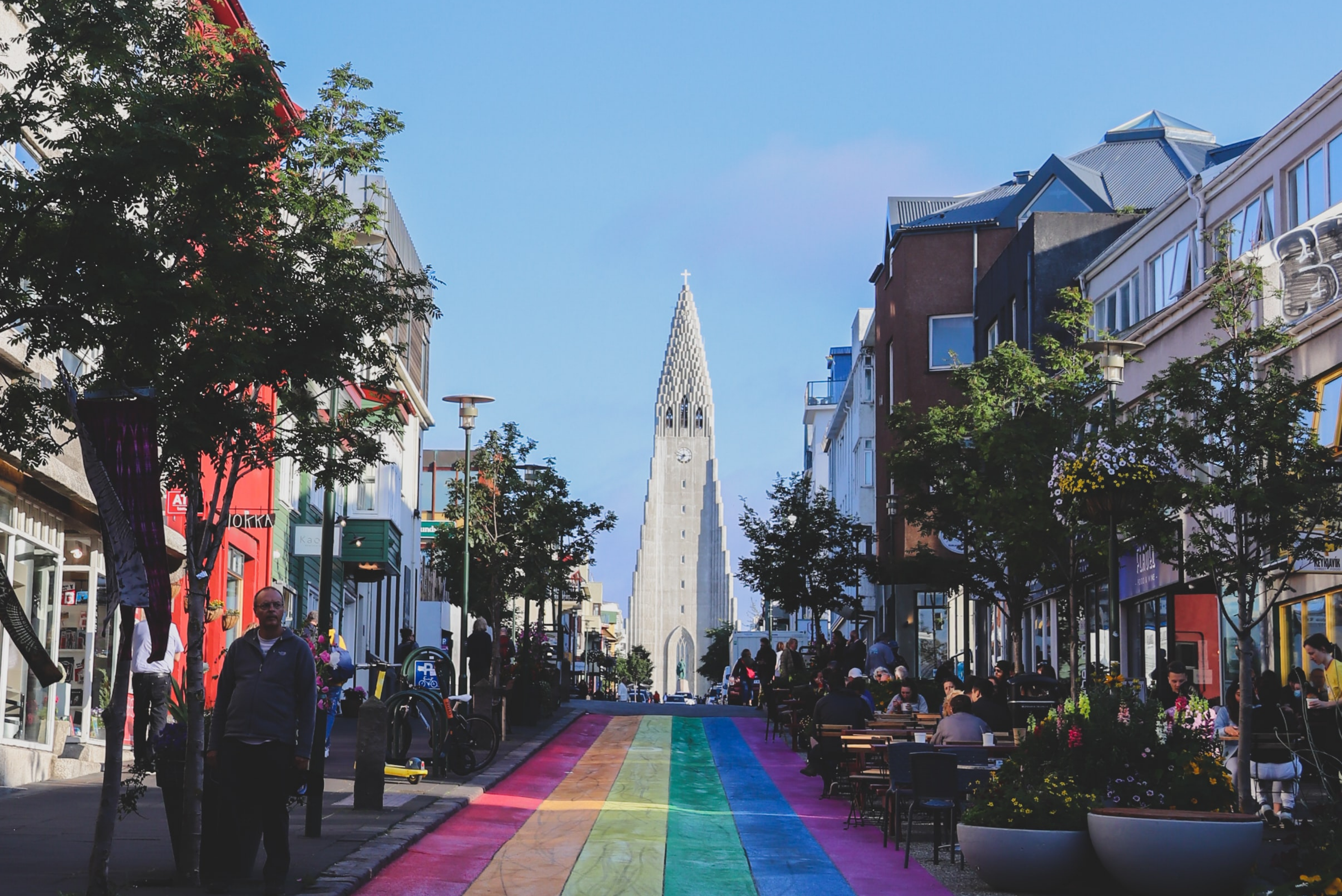
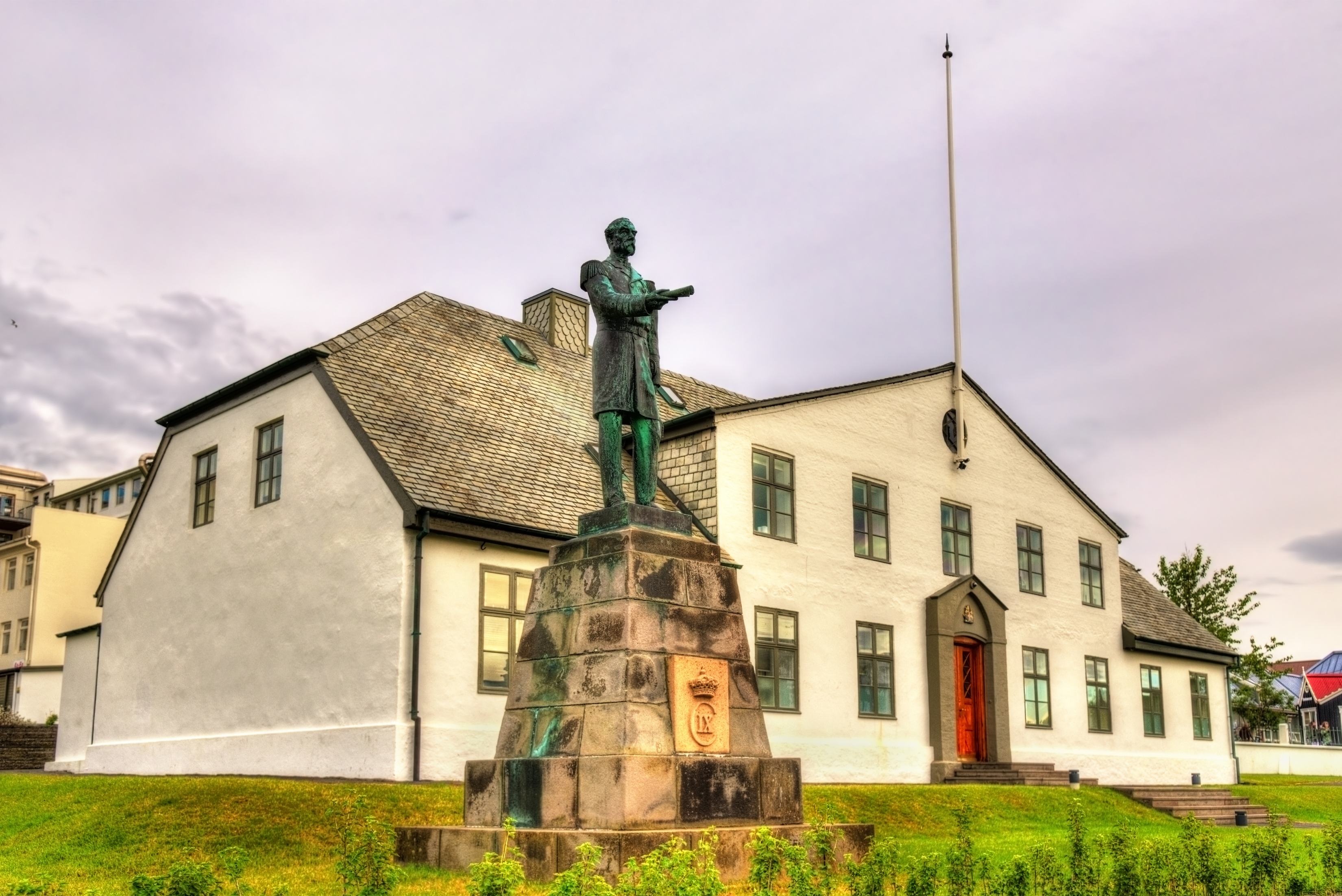
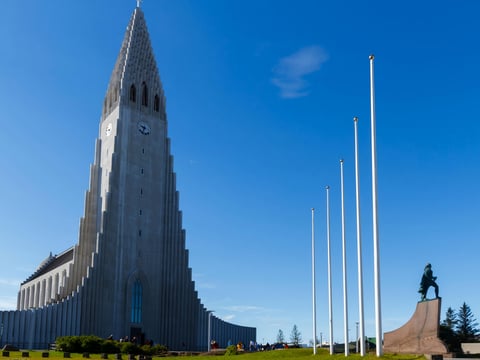
We will take a walk around the downtown city of Reykjavik where it all started. First, you'll meet your private guide by the entrance of Hallgrímskirkja, a church built differently from the typical small wooden churches of Iceland. This best-known landmark of Reykjavik stands 74m (244 ft) tall on top of the hill Skólavörðuholt and is the highest church in Iceland. Its design was inspired by glaciers and the basaltic cliffs and mountains in Iceland, designed by the renowned Guðjón Samúelsson who was the State Architect of Iceland and designed many of the most beautiful buildings in Iceland, like the University of Iceland, the first luxury hotel Hotel Borg, and the only Catholic church in Iceland the Roman Catholic Cathedral. For a small fee on-site, you can take an elevator up the church's bell tower for an amazing panoramic view over the city and its surrounding mountain rows, and in front of the church's entrance is the statue of Leifur Eiríksson, the famous Norse explorer who settled in North America around AD 1000 before Christopher Columbus. From there we walk a street leading downhill called Skólavörðustígur, otherwise known as Reykjavik Rainbow Street. This beautiful street of cafés, stores, and galleries, was partly painted in the colors of the rainbow as part of the Reykjavik Pride parade held in August every year, to represent Iceland's friendliness towards the LGBTQ community. Taking a selfie at the bottom of the rainbow-colored Skólavörðustígur with Hallgrímskirkja towering in the background makes for a great memory to photograph. We continue our way downwards to where Stjórnarráðshúsið stands, which houses the Prime Minister's Office. It was built as the House of Correction, locally called Tugthúsið, and before its construction, there was no prison in Iceland so those sentenced had to be sent overseas to Denmark since Iceland was under the reign of the Kingdom of Denmark.
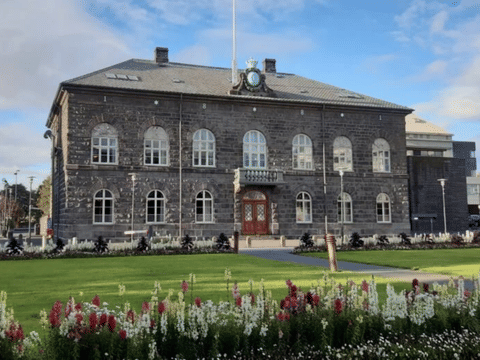
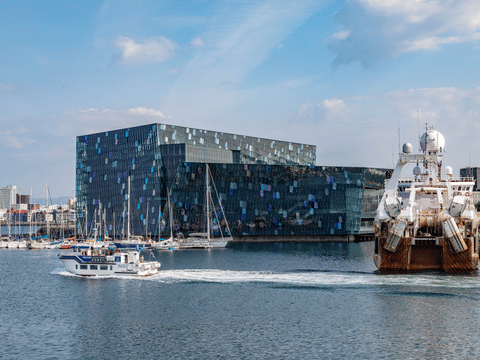
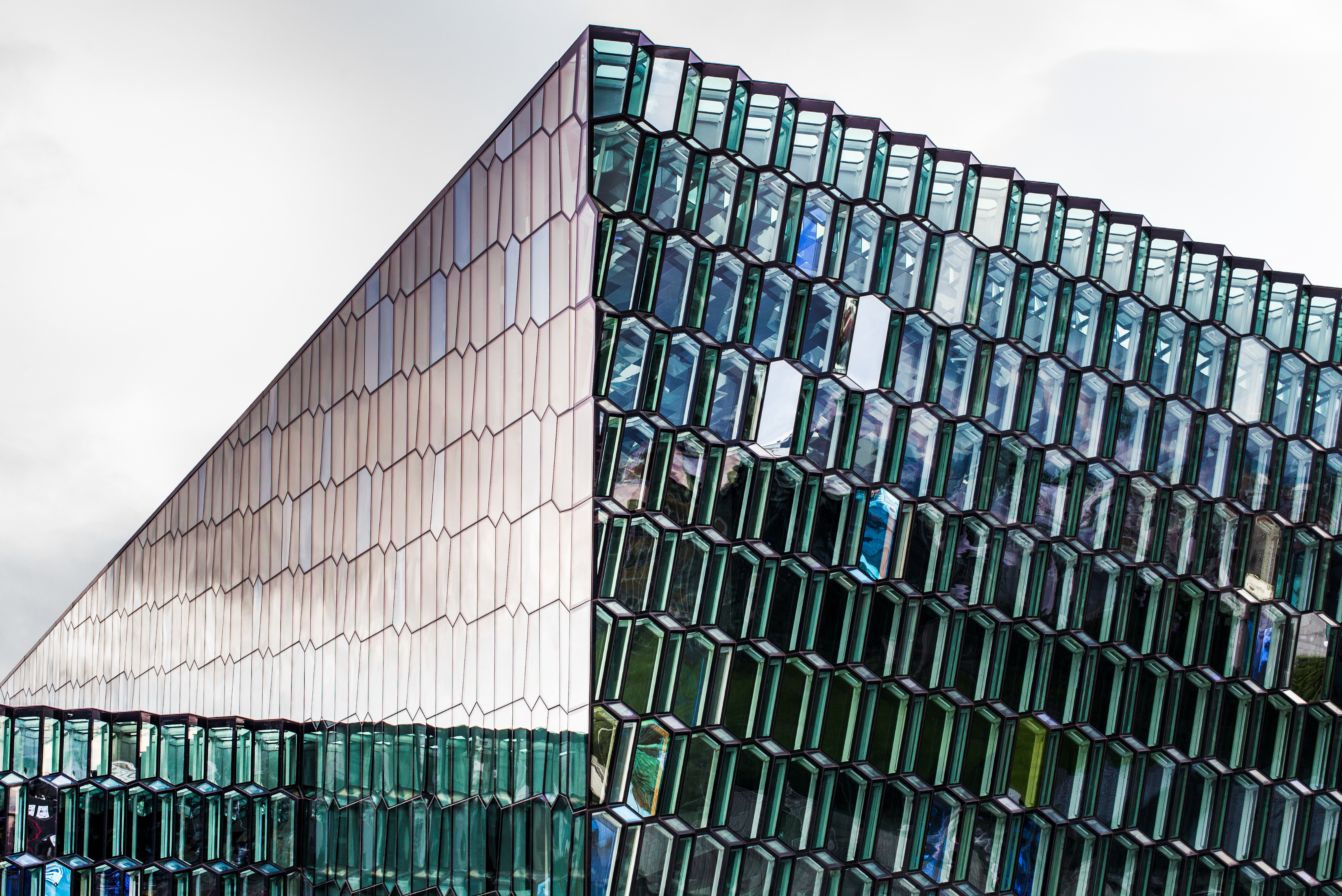
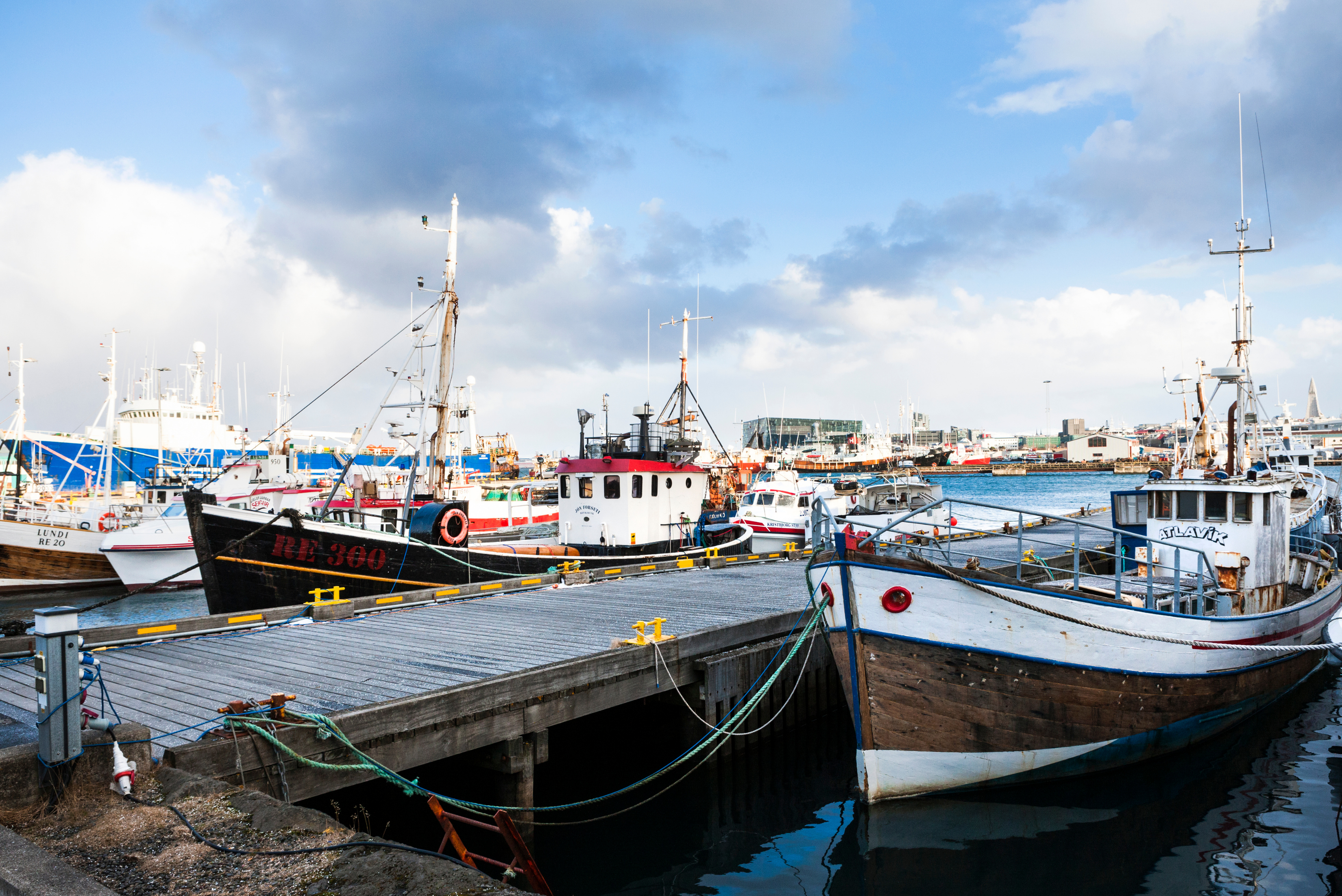
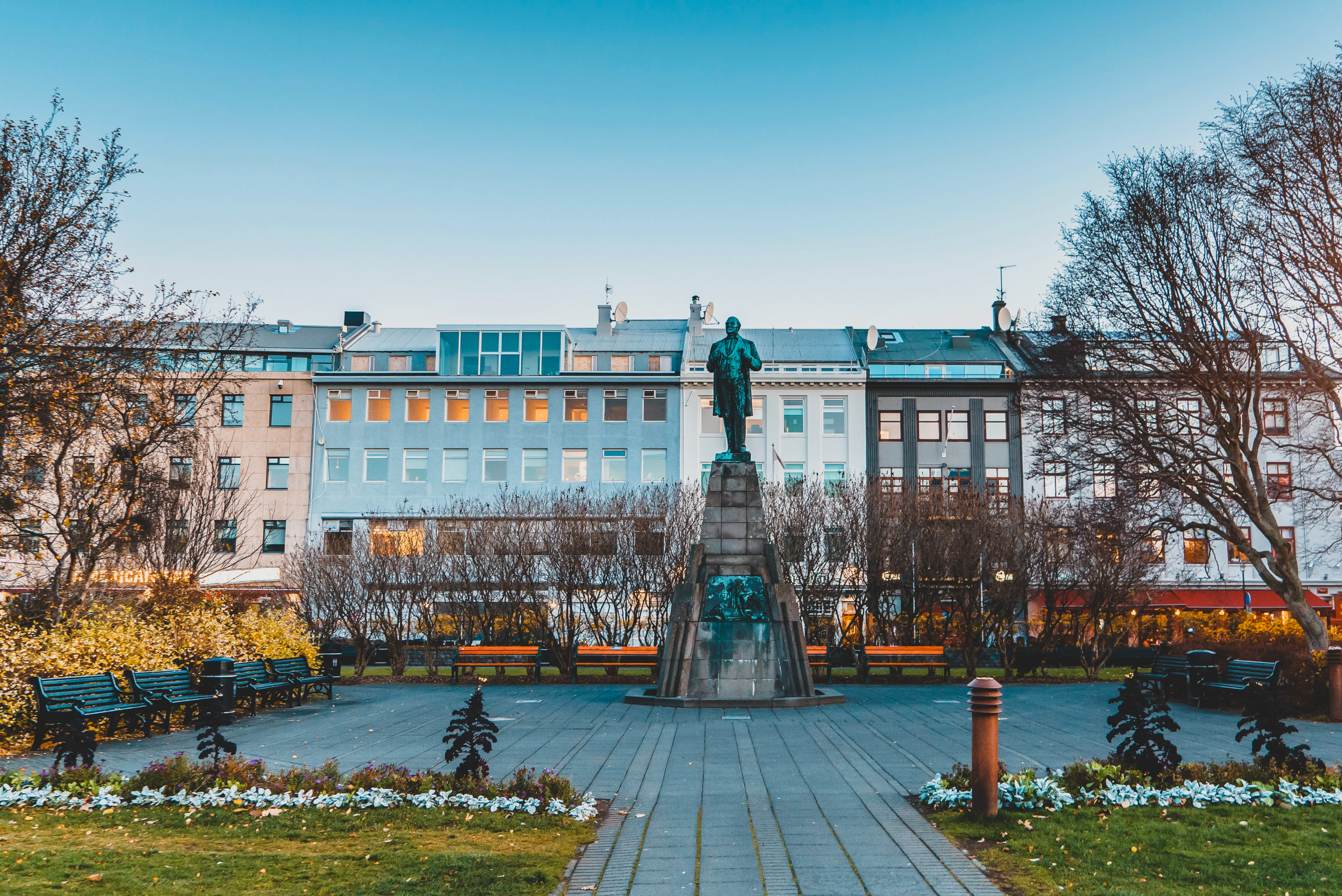
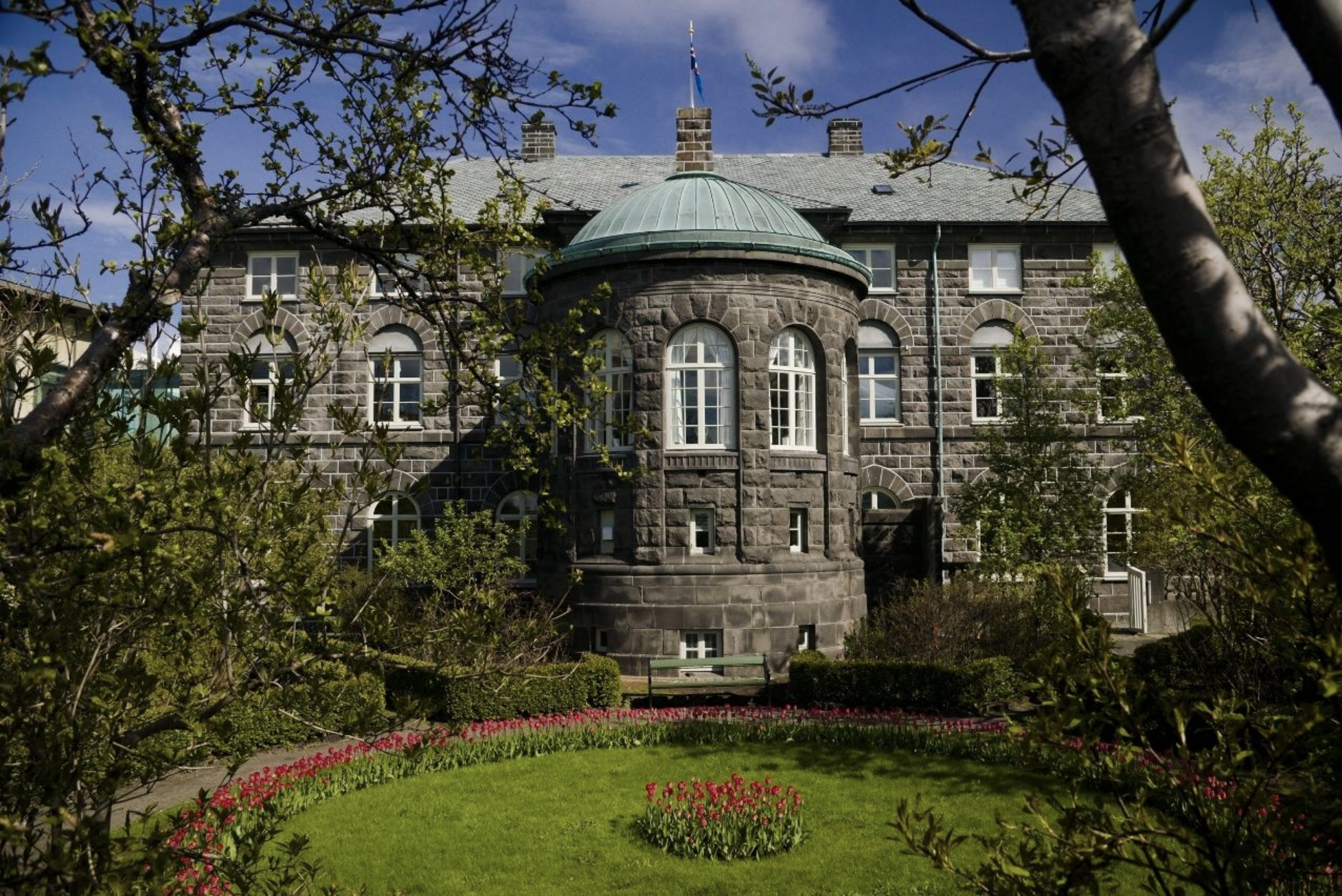
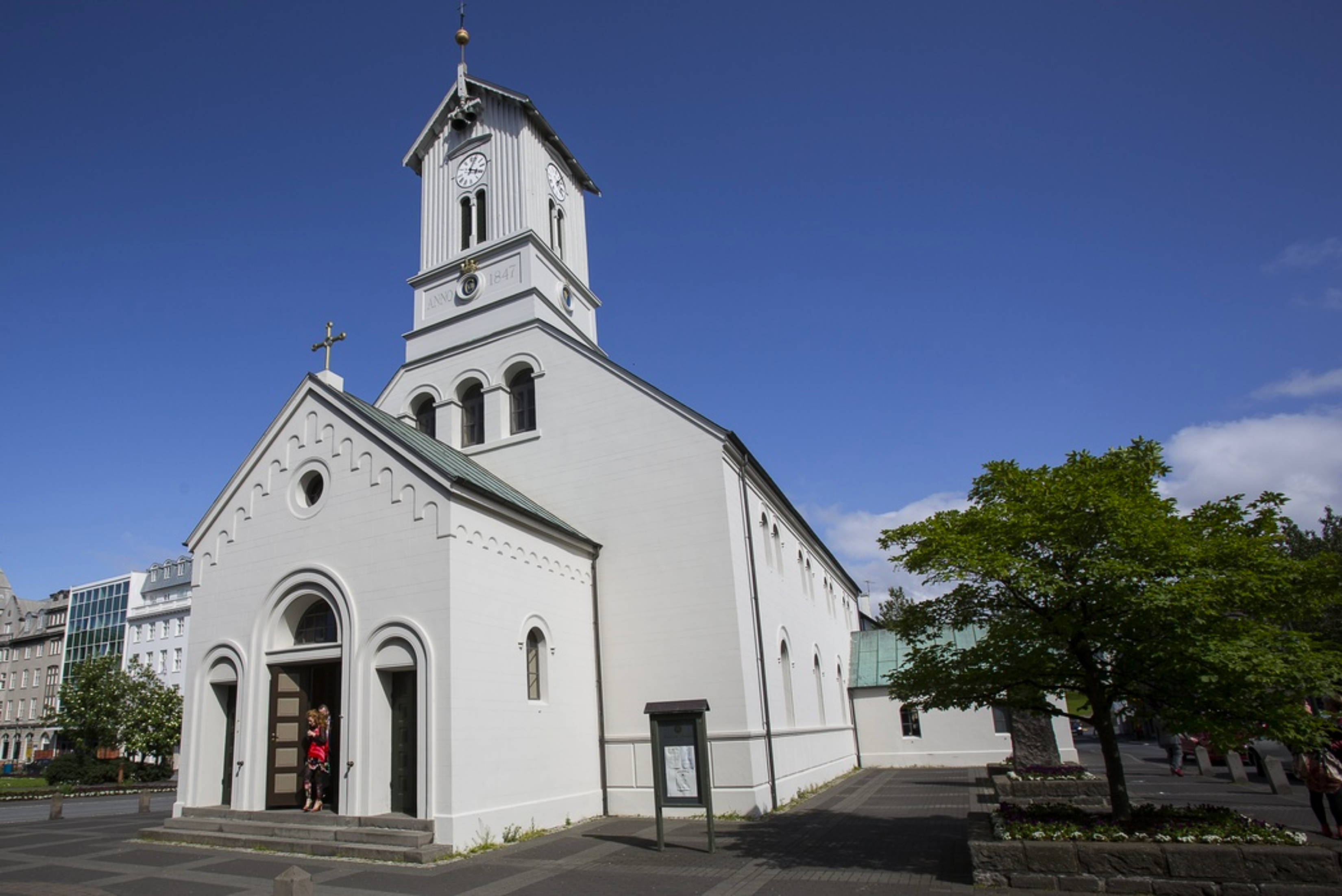
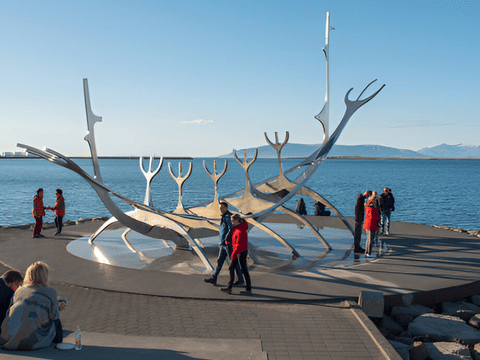
We now continue our way to the modern glass-honeycomb structured Harpa Concert Hall and Conference Center by the seafront, which has won a lot of awards for its structure inspired by Icelandic nature. It has amazing views over the bay extending to the mountain Esja and even to the glacier Snæfellsjökull. A walking path leads to the historic Old Harbor of Reykjavik which played a significant role in Reykjavik changing from a small fishing village into Iceland's capital city. Today it has many colorful houses with tourism operations, cafés, art galleries, and restaurants serving freshly caught fish from the harbor. We turn into the oldest part of Reykjavik called Grjótaþorp, or the Rock Village due to it being a field of rocks before they were removed to build the Cathedral of Reykjavik, for a glimpse of many of the oldest houses left from the 18th and 19th centuries in the oldest district of Reykjavik. Aðalstræti was the first street in Reykjavik and the main shopping street for goods delivered through the Old Harbor. This area is where clusters of turf houses built by workers and fishermen used to stand in between wooden buildings. Close by is the main public square of Reykjavik called Austurvöllur, with Hotel Borg, the Parliament House, and the Cathedral of Reykjavik standing alongside it, and cafés, bars, and restaurants on the other side. In the middle of the square is the statue of Jón Sigurðsson who was the main leader of Iceland gaining independence from the Kingdom of Denmark. One of the oldest parliaments in the world Alþingi was held every year at Thingvellir from AD 930 but then moved to Alþingishúsið or the Parliament House, a beautiful structure made of hewn dolerite that is a subvolcanic rock and behind it is an ornament garden believed to the be the oldest public garden in Iceland in its original appearance. Next to the Parliament house stands the neoclassical Lutheran church Cathedral of Reykjavik, the first building completed in the notion of Reykjavik becoming the capital city of Iceland.
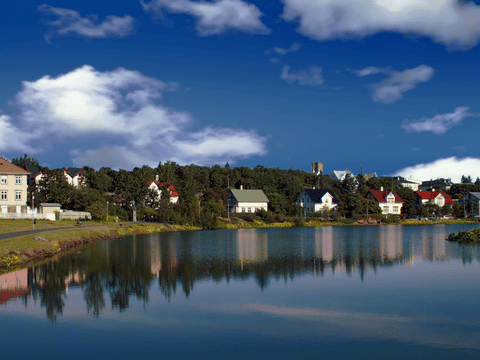
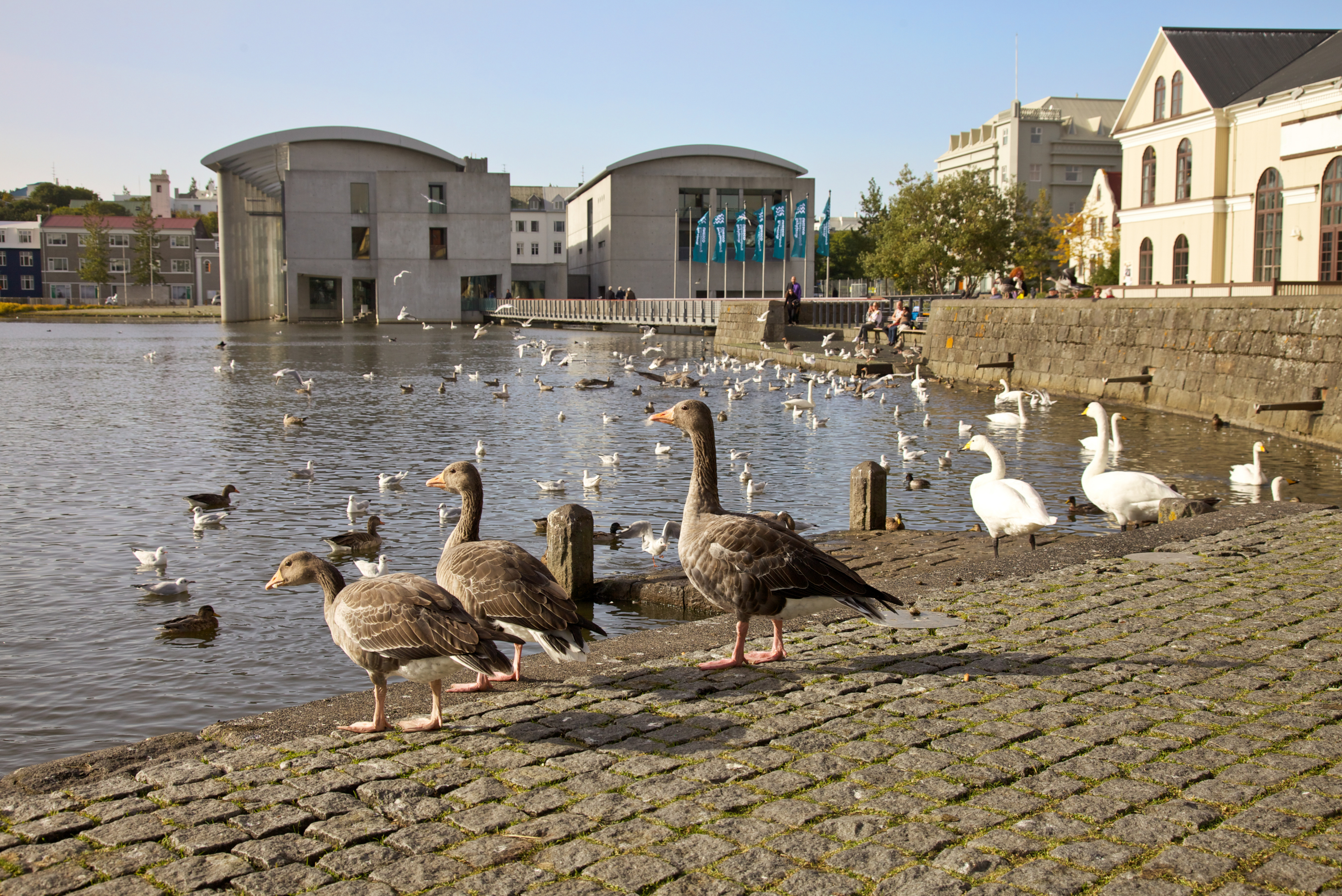
We end our walk by Reykjavíkurtjörn or the Pond of Reykjavik. Extending into this pond is the City Hall of Reykjavik, locally called Ráðhús Reykjavíkur, which houses the offices of the mayor, and on the ground floor a large 3D model of Iceland, called Íslandslíkanið. Like many other buildings in Reykjavik, the City Hall's structure was inspired by the mossy lava fields of Iceland, with a moss-grown wall by a rounded pond. Reykjavíkurtjörn, or Tjörnin for short, is popular among the locals for feeding the many species of water birds residing there. All year this area is buzzing with life, whether it be cycling, running or walking around Tjörnin, or ice skating during winters when it freezes over.
Description from the operator, Absorb Iceland. Prices and availability in the booking panel are live.
Where you go
- Hallgrímskirkja - The Church of Hallgrimur
- Skólavörðustígur, aka Reykjavik Rainbow Street
- Stjórnarráðshúsið - The Prime Minister's Office
- Harpa Concert Hall and Conference Centre
- Gamla Reykjavíkurhöfnin - The Old Harbor of Reykjavik
- Grjótaþorpið - The Rock Village district
- Austurvöllur Square
- Alþingishúsið - The Parliament House
- Dómkirkjan í Reykjavík - The Cathedral of Reykjavik
- Ráðhús Reykjavíkur - The City Hall of Reykjavik
- Reykjavíkurtjörn/Tjörnin - The Pond of Reykjavik
Included
- Private guidance in the downtown area of Reykjavik City
- Knowledgeable & experienced English-speaking guide
Not included
- Food & drinks (your private guide can recommend stops for food and refreshments during the tour)
- Entry or admission fees
- Tip or gratuity
Good to know
- Please respect your surroundings - do not throw any trash.
- For environmental responsibility purposes, you do not need to print out your e-ticket.
- Dress according to the weather by wearing warm and wind-/waterproof clothing in layers and bring gloves and a hat.
- Wear suitable footwear, preferably waterproof with a good grip, in case of slippery conditions due to ice, rain, or gravel paths.
Cancellation for this tour
Free cancellation until 2 days before departure; no refund after that. If the operator cancels for weather or safety, you get a full refund or a new date.
If the weather cancels this tour
Iceland's weather is real. What usually stops this one is wind above the treeline and river levels after rain — the guide decides on the day. Here is exactly what happens to your booking.
- 1Absorb Iceland decides, and tells us. Operators cancel when it is unsafe or pointless, and we back that call every time — we do not ask them to run anyway.
- 2We contact you by email, and by phone if your tour is the same or next day. You choose: another date if there is one you can make, or a full refund. There is no fee and nothing to argue.
- 3The refund goes back to the card you paid with, through Stripe, usually visible within a few working days. If this tour was one of several in your booking, the others are untouched.
What you do not get is the day back. If this is the only free day in your plan, put a spare day next to it — the planner leaves days free with the rest-day option. And if you want out because the forecast looks bad, that is your own cancellation: free until 2 days before departure, the operator's policy after that.
Questions on the day: [email protected] · +354 497 1373. How cancellations work in Iceland →
Sold out on your date?
Seats come back — a cancellation, or the operator adding a vehicle. Tell us the date and we will check once a day and email you if one opens. One email, then we delete the address; nothing else is ever sent to it.
Who this is not for
- Children under 4 cannot join this one.
- Priced per vehicle, so it is poor value for one or two people and good value for four or more sharing.
Read off the operator's own conditions. If none of it applies to you, this is a good one.
Why we list it
Absorb Iceland is one of 154 operators we work with — chosen for reliability, honest descriptions and how they treat guests when weather changes plans. We don't list everything; we list what we'd book ourselves. The six checks every operator passes →
Read before you book
- Keflavík Airport Transfer: Shared Shuttle vs. Private Car — Real Price and Time TradeoffsEvery Iceland trip starts at Keflavík. Shared shuttle or private transfer? The right answer depends on group size and landing time more than budget.
- Private, small group or big bus — when each Iceland tour format earns its priceThe same Golden Circle costs €85 on a coach, €107 in a minibus and over €1,000 in a private 4x4. Here's what each extra euro actually buys.
Reviews from our travellers
Only people who booked this tour through us can write here. We publish every review in full — good or bad.
No reviews yet from our travellers on this one. After your tour we send one email asking how it was, and what you write goes here, unedited.
Hiking & trekking — questions people ask
When can you hike in Landmannalaugar?
Late June to September. The highland roads to Landmannalaugar are closed by snow the rest of the year, and the opening date shifts with the weather each summer. In season, day tours from Reykjavík (/experience/16823/) run about fourteen hours with a three- to five-hour guided hike and a soak in the hot river. If you have your own 4x4, the meet-on-location hike (/experience/254326/) skips the bus.
How hard is the Laugavegur trek?
Moderate to hard. It is 55 kilometres over four days from Landmannalaugar to Þórsmörk, with river crossings, snow patches in July and weather that can turn to sleet in August. You do not need technical skills, but you need to carry a pack and walk five to eight hours a day. Guided treks (/experience/738812/) handle logistics and camping gear; the luggage transfer (/experience/1036525/) lets self-guided walkers carry a day pack only.
Can you hike to the volcano near Reykjavík?
Yes, when it is safe. The Reykjanes eruption sites at Fagradalsfjall and around Grindavík have drawn hikers since 2021, and guided tours (/experience/629086/, /experience/620679/) follow the routes the Civil Protection authority has open. If there is an active eruption, access changes daily and tours adapt or pause. The lava is usually cooled and crusted; you see fresh black rock and steam, not flowing lava. Wear boots; the ground is rough.
What should I pack for a day hike in Iceland?
Waterproof jacket and trousers, not a poncho; the wind will shred it. Hiking boots with ankle support, wool or synthetic layers, hat, gloves, sunglasses and a packed lunch with two litres of water. In the highlands add a warm mid-layer even in July. Guides carry first aid and route knowledge, not your rain gear. Cotton jeans and trainers are the most common reason people have a miserable day.
One checkout, any number of operators
Rankings are not for sale
153 operators vetted, and not all of them accepted
If it falls short, we fix it
Pairs well with
Everything here goes into the same basket and the same single payment, however many operators it comes from.
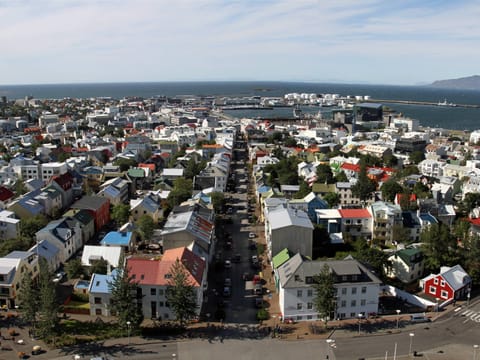 3-day package
Iceland Panorama Tours
Summer 3-Days Package
Leaves from Reykjavík
- Hotel pickup
- Family friendly
- Free cancellation 24 h
from
€420 per vehicle
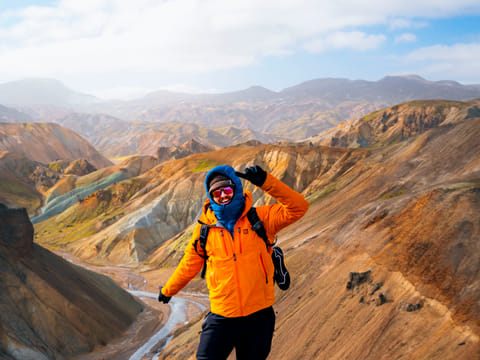 3-day packageMay – Sep
Arctic Adventures
Hidden Highlands: 3-Day Landmannalaugar & Grænihryggur Hiking Tour
Leaves from Reykjavík
- Age 10+
- Hotel pickup
- Gear included
from
€1,146 per person
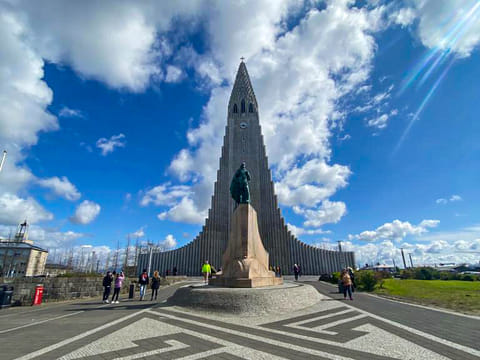 3 hours and 30 minutes
Elysia Tours
Reykjavík walking tour
Leaves from Reykjavík
- Age 12+
- Family friendly
- Wheelchair access
from
€125 per person
about the usual price
 4 hours
Iceland Panorama Tours
Reykjavik City Sightseeing
Leaves from Reykjavík
- Hotel pickup
- Family friendly
- Free cancellation 24 h
from
€380 per vehicle
 3 hours
Nordur Travel Services ehf
Private Reykjavik City Tour in Multi-Language Guide Options
Leaves from Reykjavík
- Hotel pickup
- Free cancellation 24 h
- Book the night before
from
€573 per person
 1 hour
Absorb Iceland
Private Transfer from Keflavik Airport to Reykjavik
Leaves from Reykjavík
- Hotel pickup
- Family friendly
- Free cancellation 2 days ahead
from
€322 per vehicle