Fagradalsfjall volcano hike: guided or on your own?
Hike it alone if you're fit, have a car and the trails are open. Book a guide if you don't drive or it's winter. Either way, expect cooled lava, not an eruption.
The short version
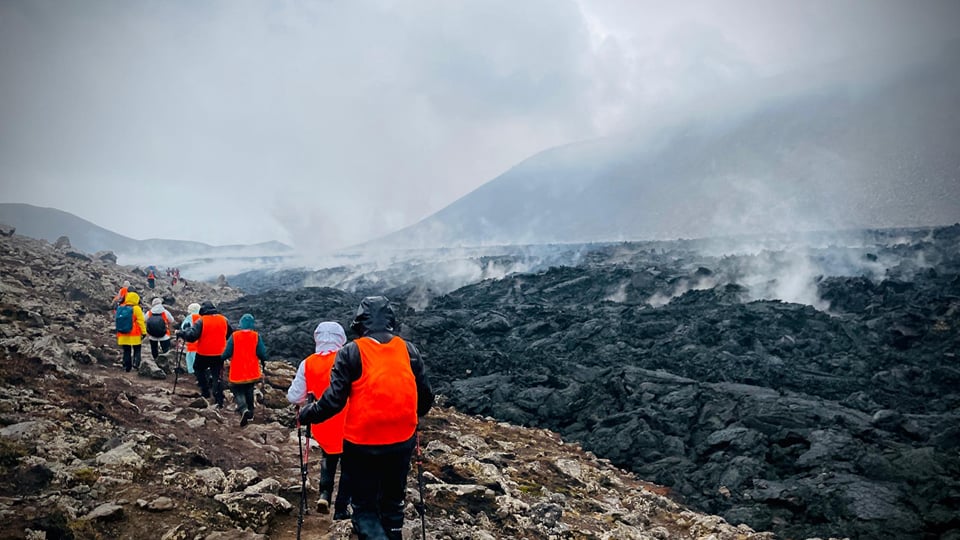
- The 2021, 2022 and 2023 eruption sites at Fagradalsfjall have cooled. What you see now is black lava, craters and sometimes steam.
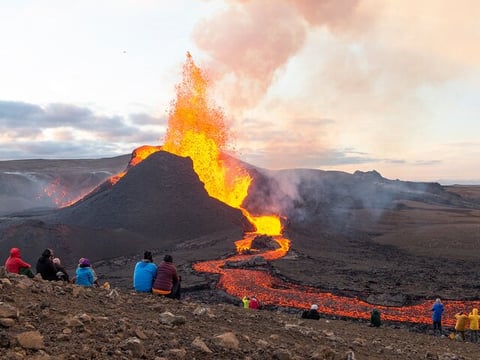
- No tour can promise flowing lava. Access is decided by the authorities, sometimes on the morning, and trails close without much notice.
- On your own you need a car, a paid car park, good boots and three to six hours depending on the trail.
- Guided bus hikes from Reykjavík run from about €117 and take seven to nine hours door to door.
If you have a car, decent fitness and a clear day, hike it on your own. The trails are marked, the car parks are signed, and a guide adds stories rather than safety on a summer day. Book a guided hike if you don’t drive, if it’s winter, or if you want someone to tell you what happened where. Either way, go for the landscape. The lava you’ll walk past has cooled, and nobody can sell you an eruption.
What is actually there now
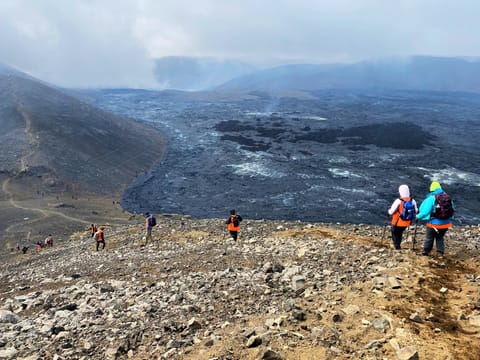
Fagradalsfjall is a low mountain in the middle of the Reykjanes peninsula. It erupted three times in three years: Geldingadalir in 2021, Meradalir in 2022, and Litli-Hrútur in 2023. Each eruption filled valleys with new lava. Those fields are still there, black and jagged, with the craters standing above them.
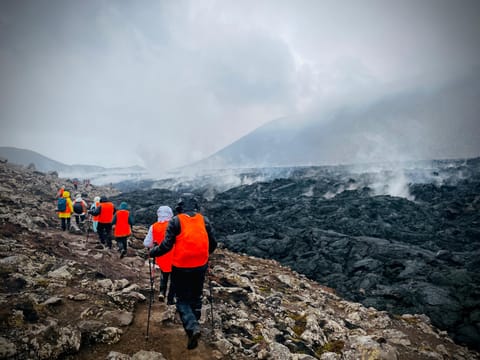
On a cold, damp day parts of the lava still steam. Beyond that, it’s rock. It’s worth seeing because it is so young: ground that did not exist when many of us bought our last phone. It isn’t a fire show.
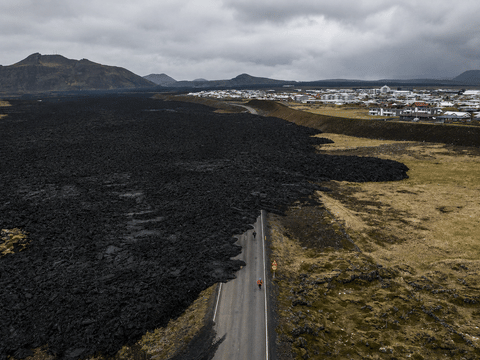
Since December 2023 the activity has moved to the Sundhnúkur crater row north of Grindavík, a few kilometres west. That area has been off-limits to hikers for long periods, because eruptions there have started with very little warning. When an eruption is under way, the authorities decide each day whether anyone can go near it, and the answer is often no.
Going on your own
The trails start from car parks off the south coast road, Road 427, east of Grindavík. The car parks charge a fee, paid by app or machine. From there:
- The 2021 craters at Geldingadalir are the closest target. Allow roughly three to four hours return, with a steep section.
- Meradalir and the Litli-Hrútur field from 2023 are further. Litli-Hrútur in particular is a long day on foot. Plan on five hours or more.
Distances and trail routes have changed as new lava has covered old paths, so check the current map at the car park and on safetravel.is before you set off.
What you need: proper hiking boots, a waterproof jacket, warm layers even in July, water and food. There is nothing to buy on the trail. The wind on the ridge is often much stronger than at the car park.
Three rules that matter. Don’t walk on the new lava; the crust can be hollow and it is very sharp. Stay out of hollows near the craters, where volcanic gas can gather. And if the area is closed, it is closed: closures here have a reason every time.
Going with a guide
A guide is worth it in three situations. You don’t have a car. It’s between October and March, when the light is short and the trails can be icy. Or you want the story told by someone who watched it happen.
The two main bus hikes from Reykjavík, both run by the same operator:
- Afternoon Volcano Hiking Tour, from €117. Seven hours with departures through the day, including an evening one. The operator rates the hike as hard, two to three hours each way. Minimum age 12. Bring your own food.
- Hike to Volcanic Eruption Sites & Reykjanes Tour, from €117. Nine hours, 08:00 start, and it adds Kleifarvatn, Gunnuhver, the lighthouse and the Bridge Between Continents. The hike is up to two hours each way, rated moderate, minimum age six. Parking and a headlamp are included. For most people this is the better day.
If you’d rather not hike at all, a short tour from a base on the edge of Grindavík shows you the newest lava. Grindavík: Eruption Site and Town Walking Tour, from €94, is two hours: up onto the defensive walls that held the lava back, then through the damaged streets. It’s age 12 and over, and it is about Sundhnúkur rather than Fagradalsfjall.
For a private day, 7-Hours Hiking Tour in Geldingadalir Volcanoes lists from €1,336, which is for the group, not per person. Lunch and snacks are included. It’s sensible for a family or four friends, expensive for two.
When to go
June to September gives you long light and the firmest trails. In winter the hike is still possible but the daylight window is small, the ground can be icy and the wind is punishing. That’s when we’d pay for a guide.
Check the weather and the Civil Protection updates the evening before, and again in the morning.
Our honest take
With a car, a summer day and working legs, go on your own. Walk to the 2021 craters, eat your sandwich on the rim, and come back. It costs you a parking fee.
Without a car, book the nine-hour Reykjanes hike 620679. You get the craters and the rest of the peninsula in one day for the same price as the shorter hike.
And set your expectations before you leave. You are going to see what an eruption leaves behind: new ground, still raw. If something is erupting when you visit and access is allowed, count yourself lucky. Don’t plan a trip around it.