Icelandic farm visits: sheep, horses and lambs
The real farm visits are small and short: a family farm with sheep and horses at Mývatn, a dairy with its own ice cream, a horse stable. Lambs are born in May.
The short version
- Lambing is in May. That's the month for newborn lambs; by June they're out in the hills.
- Most sheep spend summer loose in the highlands and are rounded up in September, so summer farm visits are mostly horses.
- The best farm visits are an hour long and run by the family who farm there, from about €33 to €87.
- A Golden Circle day with a horse farm stop is the easy option with children, from €88, minimum age 6.
- Friðheimar is a greenhouse, not a livestock farm. For that, see our separate guide.
Book a small one, run by the people who farm it. The real farm visits in Iceland are short, cheap and a bit shaggy round the edges: an hour in a barn, a family that keeps sheep and horses, some coffee. If you want lambs, come in May. If you’re travelling with children and don’t want to build a day around it, a Golden Circle tour with a horse farm stop does the job. The big-name farm on the Golden Circle is a greenhouse, and we cover it separately in Friðheimar tomato farm.
What Icelandic farms are actually like
Most Icelandic farms are sheep farms, horse farms, or both, with a few dairies in the greener valleys. They’re family-run, spread far apart and not built for visitors. Few have a gift shop.
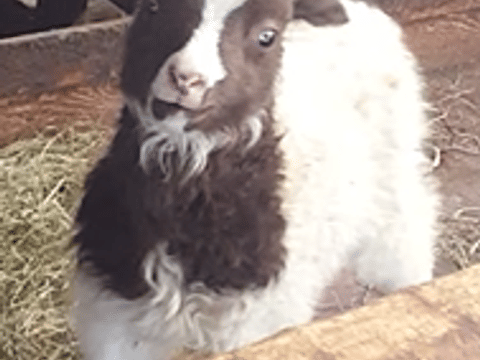
The sheep year shapes what you’ll see. Lambs are born in May, mostly indoors in the sheep sheds, and that’s the month when a farm visit means bottle-feeding and a barn full of newborns. In June the ewes and lambs go out, and for the summer most of them roam free in the hills and highlands. In September farmers ride out to round them up, and the sorting pens (réttir) are a proper local event. From October to April the sheep are back in the sheds.
So in July you’ll see sheep everywhere by the road and hardly any on the farm. Horses are around all year, which is why most farm visits lean on them.
The real farm visits
Sheep and horses at Mývatn. Our woolly friends, from €73, is a visit to a working farm by Lake Mývatn with sheep and horses, and it’s the one to book for lambs in May. There are family tickets. Its calendar shows no bookable dates right now, which is common for small operators who fill it in closer to the season. Ask us and we’ll find out.
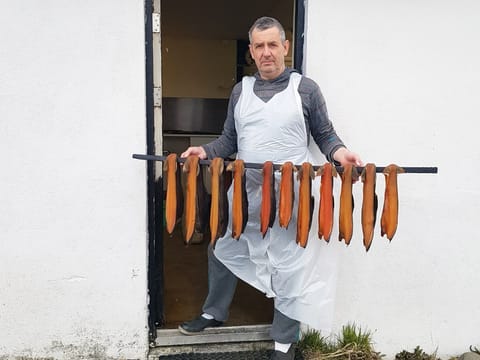
A dairy with ice cream. Skútustaðir farm culture & history tour, from €87, is four hours around Skútustaðir farm at the south end of Mývatn. It includes ice cream made on the farm from its own cows’ milk, a local smokehouse with smoked trout to taste, the pseudo-craters and a brewery tour at the end. It’s more of a local-life afternoon than a petting visit, and it suits adults best.
A horse stable. Farm visit to Hestaland, from €33, is an hour at a horse farm. The actual visit is about 20–30 minutes: the barn, the horses, the story of the breed. A show of the gaits in the indoor arena can be arranged. It’s set up mainly for groups, so contact them before you count on it.
A goat farm, privately. Private West Iceland: Goats, Waterfalls & Hvammsvík Hot Springs, from €2,408 per group, visits the Icelandic Goat Centre at Háafell, which works to keep the native goat breed going. Children tend not to want to leave. It’s a private day, so it only makes sense for a family or a group. For two people, it’s a lot of money for goats.
The easy option with children
Golden Circle & Meet the Icelandic Horses, from €88, adds a stop at Brú horse farm to the usual Þingvellir, Geysir, Gullfoss and Kerið day. The children get to pat the horses and feed them horse sweets, which are included. There’s no riding. Minimum age is six, and the day runs roughly 9:00 to 17:00. It’s not a deep farm experience, but it’s the best way to fit horses into a day you’d do anyway.
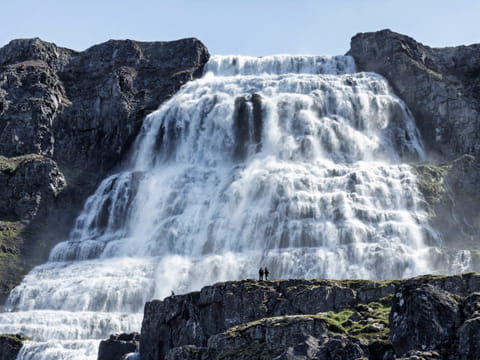
If you’re on a cruise in Ísafjörður, Dynjandi Waterfall & Farm Tour, from €132, pairs the Westfjords’ big waterfall with a stop at a traditional farm for coffee and happy marriage cake. It’s sold as a shore excursion from Ísafjörður, three and a half hours by coach, April to September.
For more ideas with children, see Reykjavík with kids: what actually works.
Farm-to-table
Here’s the honest answer: there isn’t much of a farm-to-table tour scene in Iceland. What there is, is farms that sell their own food. Skútustaðir’s ice cream is one. Plenty of farms along the ring road sell ice cream, skyr, smoked lamb or eggs from a small café or shop. If you’re driving, you’ll find them by the signs. You don’t need a tour.
A note on horses
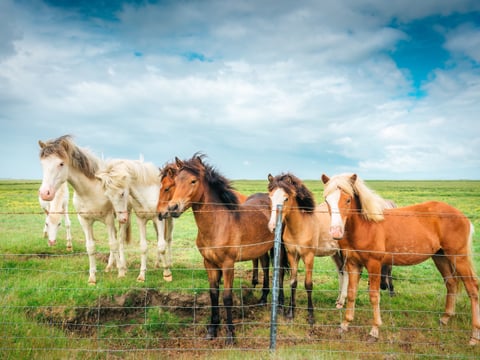
Icelandic horses are small, sturdy and friendly, and people love them. They’re also a pure breed: once a horse leaves Iceland, it can never come back. Pat them by all means, but don’t feed the horses you meet in roadside fields. They belong to someone, and the farmers would rather you didn’t.
Our honest take
For lambs, go to Mývatn in May and book the woolly friends visit. For children who just want to meet a horse, the Golden Circle horse-farm day at €88 is the easy win. For adults who like food, the Skútustaðir afternoon.
Skip anything that promises a farm in the title but doesn’t say what you’ll do there. And don’t expect sheep in the barn in July. They’re up in the hills, as they should be.